
Updated on 2026/03/07

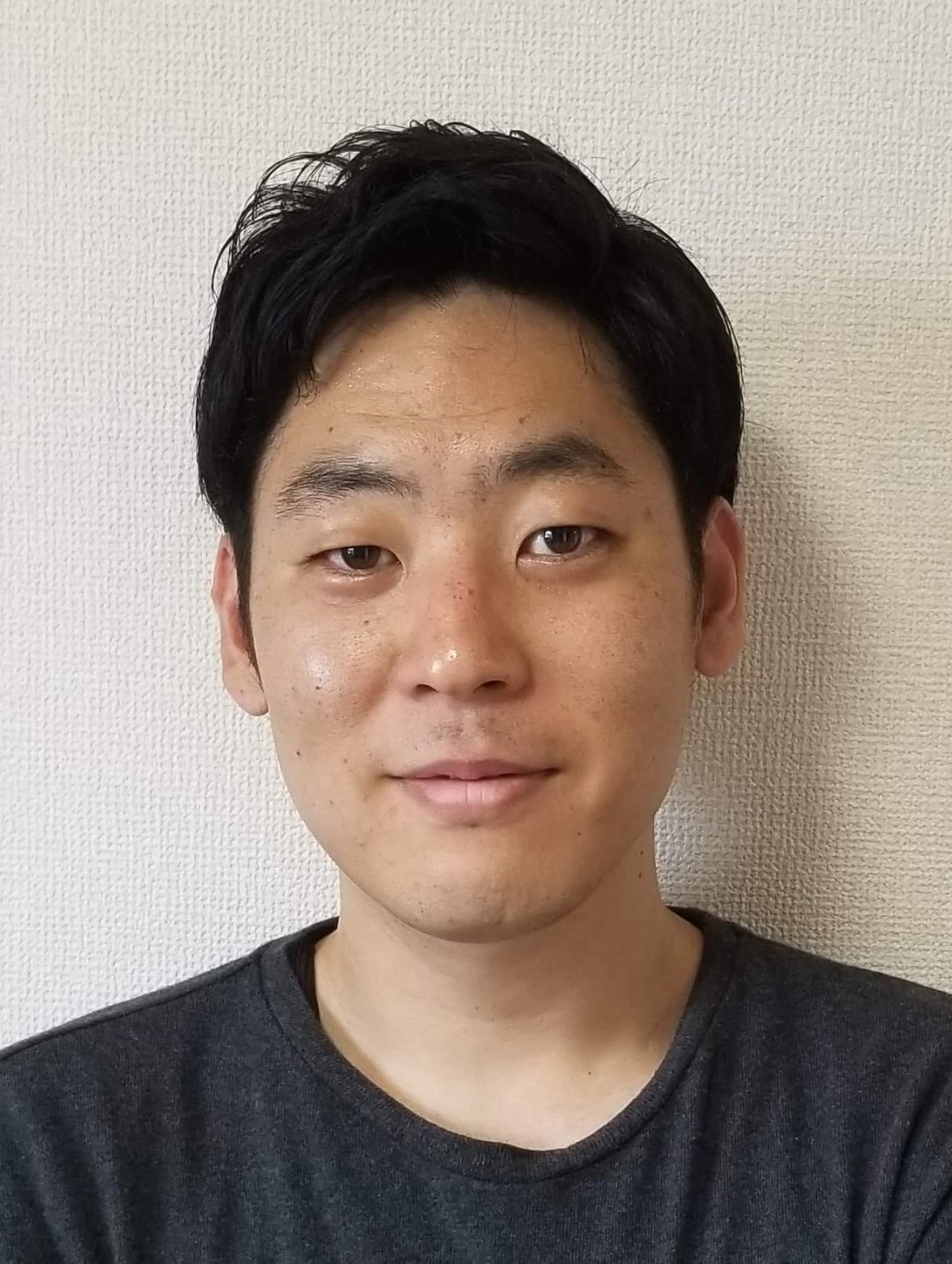
写真a

 
TAKEZAKI KAZUMA
 
Organization
Undergraduate School School of Information and Communication Senior Assistant Professor (non-tenured)
Title
Senior Assistant Professor (non-tenured)
External link

Degree

  • Doctor of Philosophy in Health and Sport Science ( 2022.3   University of Tsukuba )

  • Master ( 2014.3   University of Tsukuba )

  • Bachelor ( 2012.3   Ritsumeikan University )

Research Interests

  • Body Culture

  • Sports

  • Gender

  • Cultural Studies

Research Areas

  • Humanities & social sciences / Sociology  / Sports sociology

  • Humanities & social sciences / Gender studies  / Body Culture and Gender

Education

  • University of Tsukuba   Graduate School of Comprehensive Human Sciences

    2014.4 - 2019.3

      More details

  • University of Tsukuba   Graduate School of Comprehensive Human Sciences

    2012.4 - 2014.3

      More details

  • Ritsumeikan University   College of Social Sciences

    2008.4 - 2012.3

      More details

Research History

  • Seijo University   Center for Glocal Studies   PD Reasercher

    2021.4 - 2022.3

      More details

  • Otsuma Women's University

    2021.4

      More details

  • Toyo University

    2021.4 - 2022.3

      More details

  • Gakushuin University

    2018.4

      More details

  • Kanto Gakuin University

    2017.4

      More details

Professional Memberships

  • 日本体育・スポーツ・健康学会

    2017.4

      More details

  • 日本スポーツとジェンダー学会

    2017.4

      More details

  • カルチュラル・スタディーズ学会

    2015.4

      More details

  • 日本スポーツ社会学会

    2014.4

      More details

Papers

  • スポーツとジェンダー(2)身体美と体育・スポーツの戦後史

    竹﨑 一真

    体育の科学   70 ( 2 )   131 - 135   2020.2

     More details

    Language:Japanese   Publisher:杏林書院  

    CiNii Research

    researchmap

    Other Link: http://search.jamas.or.jp/link/ui/2020121695

  • Genealogical study of female physical beauty culture in postwar Japan, focusing on the appearance of hattoushin as "excited body" and "cosmetic gymnastics"

    TAKEZAKI Kazuma

    Taiikugaku kenkyu (Japan Journal of Physical Education, Health and Sport Sciences)   65   187 - 203   2020

     More details

    Language:Japanese   Publisher:Japan Society of Physical Education, Health and Sport Sciences  

    Hattoushin (a 1:8 head:body length ratio) represents a distinctive way of defining female physical beauty. Discourse on this topic in Japan appeared during the postwar reconstruction period, sometimes referred to as "the age of the physical body," as a representation of the ideal female physical image, and it continues to resonate with Japanese women today.<br> This paper takes up the notion of hattoushin and addresses the following issues using Butler's genealogical method for gender: ① What were the social contexts in which it emerged, and ② what techniques of body modification did it generate? ③ With a particular focus on female PE, in which the pursuit of physical beauty was incorporated, the position of PE as an essential element for femininity is explored. The aim of the present paper is to clarify how females and/or femininity were defined in terms of physical traits.<br> The results are as follows.<br> ① The emergence of hattoushin was due to the appearance and rise of fashion modeling as a profession, and ofMs. Kinuko Ito winning third place in the Miss Universe contest. However, the popularity of hattoushin was not merely because it came to be used as a description of the body. It was recognized as a well-developed "health andbeauty" movement that could overcome the negative aspects of defeat/occupation and was regarded as a symbol of postwar female liberation.<br> ② As a result of this rising attention to the female body form, hattoushin was recognized as the ideal that could be achieved through new techniques such as cosmetic gymnastics and "physical standard values" for visualizing ideal physical beauty.<br> ③ Postwar female PE reform had a particularly strong influence on the development of female physical beautyculture, aiming to establish the independence of females under the slogan "Female PE with female hands". Inthat process, the pursuit of physical beauty through cosmetic gymnastics took a central role. Female PE reformdeveloped because postwar feminism itself evaluated the pursuit of physical beauty as a medium for subjectiveself-expression by women who were liberated.<br> This process is similar to Butler's statement "The feminist subject turns out to be discursively constituted by the very political system that is supposed to facilitate its emancipation". That is, female PE itself, which is a feminist political system promoting female liberation, decided on an ideal form of femininity, and thus strengthened "female" categorization. More specifically, feminism itself called for the pursuit of physical beauty, and inspired many women.

    DOI: 10.5432/jjpehss.19086

    CiNii Research

    researchmap

  • Construction and fluctuating views of the male body::Focusing on formation processes of the "male beauty/body (bodybuilding) culture"

    Takezaki Kazuma

    Taiikugaku kenkyu (Japan Journal of Physical Education, Health and Sport Sciences)   64 ( 2 )   687 - 704   2019

     More details

    Language:Japanese   Publisher:Japan Society of Physical Education, Health and Sport Sciences  

    In postwar Japan, the United States (US) could be viewed as Japan's "significant other." The US had a considerable cultural impact on Japan and was responsible for alterations in postwar Japanese identity. Of particular importance was the influence of the US on the popular view of body form. The postwar restructuring of Japan's national identity included the adoption of new views of the body as a result of US influence. This study investigated the culture of male beauty/body (bodybuilding) that emerged in Japan during the postwar period of occupation, and revealed how "male beauty" consciousness was generated in relation to nationalism by focusing on (1) the social context in which "male beauty/body culture" emerged and (2) the changes in conceptions of masculinity and body consciousness. This analysis yielded the following results:<br> (1) Bodybuilding emerged in the social context of the occupation/reconstruction period and from a masculine crisis of male feminization in Japan. It was developed by the Japan Bodybuilding Association (JBA) as part of a movement to create "new Japanese men".<br> (2) However, bodybuilding was criticized as being feminine, linked to homosexuality, and leading to a useless "Hercules-type" body.<br> (3) In response to this criticism, the JBA shifted its aim from the acquisition of a burly, Herculean build to one of a healthy and functional ("Hermes-type") body that represented harmony between the body and the spirit. The aim of this shift was to gain legitimacy for bodybuilding as a masculine act.<br> In addition to these aims in trying to help create "new Japanese men", the JBA also intended to legitimize male bodybuilding culture within a national context, seeking to popularize and expand its activity by criticizing the American "Hercules-type" body while promoting the "Hermes-type" body preferred in Japan. In this way, discourse concerning the legitimacy of male beauty/body (bodybuilding) culture developed in conjunction with nationalism, and created an important forum for consideration of the ideal Japanese male body form.

    DOI: 10.5432/jjpehss.19025

    CiNii Research

    researchmap

  • The Ageing Body and Bodily Practices in Elderly Males:A Case Study of Bodybuilders in Tokyo's Gym S

    TAKEZAKI Kazuma

    Japan Journal of Sport Sociology   23 ( 1 )   47 - 61   2015

     More details

    Language:Japanese   Publisher:Japan Society of Sport Sociology  

    As Japan's rapidly ageing society continues to expand, bodily practices targeting the ageing body, such as sports facilities for the elderly and anti-ageing goods, have become ubiquitous. Previous studies have shown that such practices are of value to the elderly, enabling them to improve their quality of life and to redefine their identity. However, these studies have not fully explained why the elderly desire such values and how they acquire them.<br> Recognizing the problematic nature of this lack of deeper understanding, this paper examines the case of elderly male bodybuilders at Tokyo's Gym S, focusing on their practices to reveal how they derive value from their bodybuilding. The research finds that elderly bodybuilders do not view their bodily practices as a solution to physical ageing. Rather, they derive value from being different from those they view as "the ordinary elderly," those members of Gym S who work out in order to promote good health. The elderly male bodybuilders distinguish themselves from "the ordinary elderly" by seeking new images of their bodies and through acceptance of their ageing.<br> In conclusion, this paper argues that the bodily practices of bodybuilding among the elderly could possibly promote ageing as "abnormal," while they could also elevate the body image of the elderly in spite of the body's natural ageing process. This paper points out the necessity of examining how the ageing body and bodily practices are connected through investigations of the lived experiences of the elderly.

    DOI: 10.5987/jjsss.23.1_47

    CiNii Research

    researchmap

Books

  • クリエイティブであれ : 新しい文化産業とジェンダー

    McRobbie, Angela, 田中, 東子, 中條, 千晴, 竹﨑, 一真, 中村, 香住

    花伝社,共栄書房(発売)  2023.2  ( ISBN:9784763420275

     More details

    Total pages:309, 30p   Language:Japanese  

    CiNii Research

    researchmap

  • ポストヒューマン・スタディーズへの招待

    竹﨑 一真, 山本 敦久, 杉山 文野, 岡田 桂, 渡部 麻衣子, 標葉 靖子, 隠岐 さや香, 久保 友香, 関根 麻里恵, 田中 東子, 重田 園江, 山本 由美子, 門林 岳史( Role: Joint editor)

    堀之内出版  2022.4  ( ISBN:4909237712

     More details

    Total pages:216   Language:Japanese  

    CiNii Research

    ASIN

    researchmap

  • 日本代表論 : スポーツのグローバル化とナショナルな身体

    有元, 健, 山本, 敦久

    せりか書房  2020.4  ( ISBN:9784796703864

     More details

    Total pages:247p   Language:Japanese  

    CiNii Research

    researchmap

  • ボディ・スタディーズ : 性、人種、階級、エイジング、健康/病の身体学への招待

    DeMello, Margo, 田中, 洋美, 兼子, 歩, 齋藤, 圭介(社会学), 竹崎, 一真, 平野, 邦輔

    晃洋書房  2017.5  ( ISBN:9784771027978

     More details

    Total pages:x, 251p   Language:Japanese  

    CiNii Research

    researchmap

MISC

Research Projects

  • フェムテックをめぐる「社会技術的想像」の研究

    Grant number:24K03608  2024.4 - 2028.3

    日本学術振興会  科学研究費助成事業  基盤研究(C)

    標葉 靖子, 竹崎 一真

      More details

    Grant amount:\4550000 ( Direct Cost: \3500000 、 Indirect Cost:\1050000 )

    researchmap

  • Research on the relationship between gender norms in society and technologies that target human body

    Grant number:23KK0035  2023.9 - 2027.3

    Japan Society for the Promotion of Science  Grants-in-Aid for Scientific Research  Fund for the Promotion of Joint International Research (International Collaborative Research)

      More details

    Grant amount:\19760000 ( Direct Cost: \15200000 、 Indirect Cost:\4560000 )

    researchmap

  • FemTech (フェムテック) のELSI検討に関する企画調査

    2022

    戦略的な研究開発の推進 戦略的創造研究推進事業 RISTEX(社会技術研究開発) 

    標葉 靖子

      More details

    今市場がその黎明期を迎えているFemTech(フェムテック)に注目し、〈女性〉の心身の健康問題にフォーカスをあてた当該イノベーションにおいて検討すべきELSI議題を抽出し、当該議題の言説化に向けた課題の整理・提示を行う。FemTechをめぐる「社会技術的想像」についての予備的な解析を行うとともに、国内事例調査や海外動向調査の結果も踏まえつつ、FemTechをめぐるELSI検討が、ジェンダーや多様性をとらえた科学的な研究・開発の推進につなげるための道筋を探る。

    researchmap

    J-GLOBAL
